%2Ffit-in%2F250x250%2Fguide_websites%2F17498%2Fimages%2F1721392453718image44.png&w=1920&q=100)
Bluefish Caught on Fishing Charter in Norfolk VA
Bluefish Fishing in Norfolk Waters - What to Expect
%2F%2Fusers%2Ff4b71dd0-e210-4378-a2c7-e2e5e25a9b9f%2Fimages%2Fnorfolk-bluefish-fishing-catch-2488.jpeg&w=1920&q=75)
Fishing Charter by Captain James Carroll in April

- Set Sail With The Top Norfolk Fishing Charters!


Summary
A spring fishing charter in Norfolk waters delivered solid bluefish action on a Friday in April. Working with Captain James Carroll of Goin' Anyways SportFishing, we targeted these aggressive fighters in their prime season. The catch demonstrated why Norfolk remains a reliable destination for consistent bluefish opportunities throughout the year.
Fishing Charter with Captain James Carroll - Rates & Booking
Captain James Carroll of Goin' Anyways SportFishing offered solid bluefish action on a Friday in April in Norfolk waters. This fishing charter targets species that bite consistently throughout the season, making it a reliable choice for anglers looking to put fish on the deck. The captain brings local knowledge of Norfolk's productive fishing grounds and experience reading conditions to maximize your time on the water.
Book your fishing charter today and get ready for an authentic Norfolk fishing experience. Captain Carroll's operation focuses on quality fishing rather than quantity of promises, and the results speak for themselves.
Highlights of Norfolk Bluefish Fishing
Bluefish in Norfolk waters are known for their aggressive strikes and powerful runs. They respond well to a variety of techniques and are forgiving enough for both experienced anglers and newcomers to enjoy successful fishing. Spring through fall offers the most consistent action, with fish ranging from schoolies to larger specimens that test your equipment and skills.
The Norfolk area provides access to productive fishing grounds within reasonable distances from the marina. Water conditions, structure, and baitfish availability create an environment where bluefish congregate predictably. The charter puts you where the fish are most likely to be, eliminating guesswork and maximizing your chances of connecting.
Local Species Insights: Bluefish
Bluefish are one of the Atlantic Coast's most exciting and reliable gamefish. These aggressive predators hunt in schools and aren't shy about eating what you put in front of them. They're built for speed and power, with strong jaw muscles and a body designed for quick acceleration and hard runs. Once hooked, they'll test your drag, your line, and your patience with acrobatic displays and sustained resistance.
In Norfolk waters, bluefish typically inhabit areas with moderate to deep channels, nearshore structures, and areas where baitfish concentrate. They respond to movement and will chase both live and cut baits, as well as lures. Their presence in Norfolk extends through much of the fishing season, making them a staple target for local anglers. The water conditions in Norfolk's shipping channel and offshore grounds create ideal habitat for these fish to hunt and grow.
What makes bluefish particularly appealing is their behavior. They don't require delicate presentations or finesse. They're straightforward hunters that eat with confidence, which means your fishing day feels active and engaging. You're not waiting long between bites when conditions are right. For charter fishing, this translates to higher activity levels and more hands-on time fighting fish.
Fishing in Norfolk: Bluefish
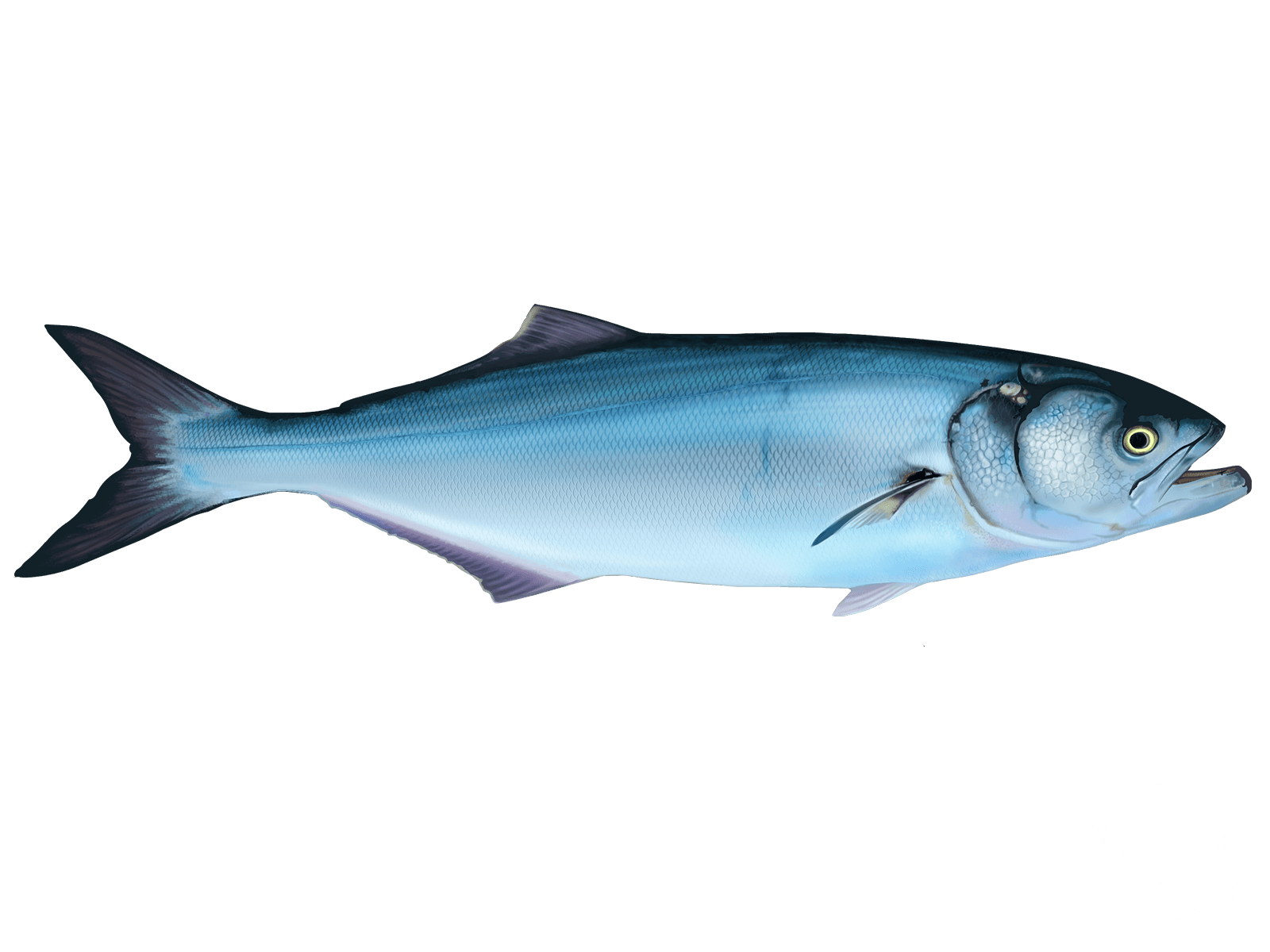
Bluefish Overview
Bluefish (Pomatomus saltatrix) belongs to the family Pomatomidae and order Perciformes, making it one of the ocean's most aggressive and exciting game fish to pursue. Known for its distinctive grayish-blue dorsal coloring that fades to white on the belly, broad forked tail, and those impressive sharp triangular teeth, the bluefish is a true apex predator in coastal waters. This warm-water migratory species travels vast distances across the Atlantic Ocean, from Nova Scotia all the way to Argentina on the American side, and from Spain to southern Africa on the European and African coasts. In South Africa it's called Shad or Elf, while anglers in Australia and New Zealand know it as Tailor. What makes bluefish particularly fascinating is their explosive feeding behavior—they're known to enter a feeding frenzy so intense that locals call it a "Bluefish Blitz," where they churn the water like a washing machine while attacking schools of smaller fish in shallow depths.
Bluefish Habitat and Distribution
As a marine pelagic species, bluefish thrive in subtropical and temperate waters worldwide, typically inhabiting the continental shelves of North America, Australia, and Southeast Asia. You'll find them in nearshore and onshore environments including brackish waters, estuaries, rocky headlands, surf beaches, and above the continental shelf. The species is notably absent from the northern Pacific Ocean, making Atlantic and Indo-Pacific coastal regions the prime territories for encounters. Bluefish are migratory by nature, moving seasonally with water temperatures—they're seasonal visitors to iconic locations like Cape Cod, arriving in mid-June and sticking around through mid-October before retreating to warmer wintering grounds from North Carolina down to Florida's tip. Interestingly, they often migrate to open waters in schools, making them both predictable and challenging quarries for recreational and commercial anglers alike.
Bluefish Size and Weight
While commonly caught bluefish range from about 15 to 51 inches in length, typical specimens weigh between 3 to 15 pounds—perfect size for a solid day's fishing without requiring specialized heavy gear. However, the species has the potential to reach much larger sizes; historical records show bluefish can grow up to 40 pounds, though most of the population tops out around 20 pounds. The average fish you'll reel in during a seasonal run is usually on the smaller side, especially the juvenile "snappers" or "baby blues" that appear in late summer in sandy harbors and tidal rivers—these young fish are perfect for introducing inexperienced anglers to the species without the heart-pounding intensity of a full-grown adult bluefish.
Bluefish Diet and Behavior
Bluefish are voracious, aggressive feeders with a complex and opportunistic diet. Their strong, flat triangular teeth and large mouth are perfectly designed for hunting schools of forage fish at high speed. They show a particular preference for sardine-like fish, menhaden, weakfish, grunt, anchovies, squid, and shrimp—basically, if it's small and swimming in a school, a bluefish wants it. What's remarkable is their feeding intensity; they'll continue attacking and consuming prey long after their stomachs are full, which is why they're considered one of the most aggressive predators in coastal waters. This feeding frenzy behavior makes them exciting for anglers but also explains why they're cannibalistic—larger bluefish won't hesitate to eat their own young. In return, bluefish themselves serve as nutritious prey for larger predators including dolphins, billfish, sharks, and tuna, maintaining their critical role in the marine food web. These fish can live up to 9 years in the wild, allowing them to grow and develop into the powerful fighters that make them legendary among sport fishermen.
Bluefish Spawning and Seasonal Activity
The seasonal movement of bluefish is one of the most predictable and exciting aspects of coastal fishing calendars. These migratory warriors follow warming water temperatures, moving north in late spring and early summer to feed voraciously in nearshore and onshore environments. Peak activity at destinations like Cape Cod runs from mid-June through mid-October, creating a well-defined season when anglers know exactly when to target this species. During late summer, juvenile bluefish—affectionately called "snappers" or "baby blues"—appear in sandy harbors, bays, and tidal rivers in impressive numbers, making this an ideal time for younger and less experienced anglers to cut their teeth on this powerful species. Come autumn, as water temperatures begin to drop, bluefish migrate back to warmer wintering grounds ranging from North Carolina southward to Florida's tip, where they remain until the cycle begins anew.
Bluefish Techniques for Observation and Capture
Hook and Line Method: This is the most popular recreational approach for targeting bluefish. Use circle hooks exclusively (regulations strictly prohibit other hook types), and be aware that recreational anglers are typically limited to three fish per day with no minimum size requirement. Oily baitfish like eels make excellent choices, though nearly any baitfish works well. Cut bait shaped like small lures is also highly effective. Fish from tidal rivers, bays, and sandy harbors during the summer months when water temperatures are warm. Around Cape Cod, peak fishing occurs mid-June through early October in nearshore areas where schools stage before migration.
Artificial Lures and Flies: When using artificial presentations, you're limited to a maximum of two treble hooks per lure or fly. Small metallic jigs, spoons, and streamers that mimic the baitfish bluefish typically chase work exceptionally well. Cast into areas where you spot surface feeding activity or "Bluefish Blitz" action—that telltale churning and splashing that signals an active feeding school.
Commercial Gillnet and Trawl Methods: While primarily used in commercial fisheries (which require permits), gillnets and trawls are effective for capturing larger quantities. However, the recreational angler should focus on hook-and-line methods for the most authentic and rewarding experience. Important safety note: Always handle bluefish with care—their powerful jaws and sharp teeth can deliver serious bites if you're not cautious when removing hooks or handling the fish.
Bluefish Culinary and Utilization Notes
When properly prepared, bluefish offers mild, flaky white meat that's quite delicious—though size matters significantly in the kitchen. Smaller fish (under 10 pounds) tend to have a milder, more delicate flavor compared to their larger brethren, which develop a stronger, more pronounced taste. The flesh is naturally high in omega-3 fatty acids, making it nutritionally valuable for most diets. However, important health considerations exist: due to significant mercury content, children and adult women of childbearing age are advised against regular consumption of bluefish. Men and older adults can generally enjoy it in moderation as part of a balanced diet. Proper preparation is key—many coastal restaurants feature bluefish on their menus during peak season, prepared simply with minimal seasoning to highlight its natural flavors. The oily nature of the meat makes it ideal for grilling, smoking, or pan-searing rather than poaching.
Bluefish Frequently Asked Questions
Q: What is the best bait for catching bluefish?
A: Oily baitfish like eels are top choices, but you can use almost any baitfish species. Cut bait shaped like small lures is also highly effective. The key is matching the size and type of forage fish that naturally occur in your fishing area. Bluefish are aggressive feeders and will pursue a wide variety of prey, so experimentation often pays off.
Q: Where can I find bluefish near Cape Cod and other popular locations?
A: Bluefish are seasonal visitors to Cape Cod waters from mid-June through mid-October, inhabiting nearshore and onshore environments. Look for them in tidal rivers, bays, sandy harbors, rocky headlands, and surf beaches. During summer, established fishing hotspots in these habitat types consistently produce action. They migrate to warmer waters from North Carolina to Florida for winter.
Q: Is bluefish good to eat?
A: Yes, when properly prepared, bluefish is excellent eating with mild, flaky meat. Smaller fish (under 10 pounds) have a delicate flavor, while larger specimens develop a stronger taste. However, due to mercury content, children and adult women should limit consumption. Adult men can enjoy bluefish as part of a balanced diet in moderation.
Q: When is the best time to catch bluefish?
A: Peak season at most locations is summer through early fall. In Cape Cod, prime fishing runs from mid-June through mid-October. Late summer brings juvenile "snappers" to shallow bays and harbors, making it ideal for beginners. Early morning and late evening feeding periods typically produce the most action.
Q: What regulations should I follow when fishing for bluefish?
A: Recreational anglers can typically keep up to three bluefish per day with no minimum size requirement, though regulations vary by state and region. You must use circle hooks exclusively. Artificial lures are limited to a maximum of two treble hooks. Always check local fishing regulations before heading out, as quotas and bag limits may change seasonally.
Q: Why are bluefish called such aggressive fighters?
A: Bluefish possess powerful jaws, sharp triangular teeth, and lightning-quick swimming speeds that make them formidable predators. They attack with intensity and determination, often thrashing and running hard once hooked—providing the explosive, heart-pounding action that makes them beloved by sport anglers worldwide. Their feeding behavior is so intense and coordinated that anglers call it a "Bluefish Blitz."