%2Ffit-in%2F250x250%2Fguide_websites%2F17498%2Fimages%2F1721392453718image44.png&w=1920&q=100)
Bluefish and King Mackerel Catch in Norfolk VA
Bluefish and King Mackerel Fishing in Norfolk - What to Expect
%2F%2Fusers%2Ff4b71dd0-e210-4378-a2c7-e2e5e25a9b9f%2Fimages%2Fnorfolk-bluefish-king-mackerel-catch-2462.jpeg&w=1920&q=75)
Fishing Charter by Captain James Carroll in April

- Set Sail With The Top Norfolk Fishing Charters!


Summary
Join Captain James Carroll of Goin' Anyways SportFishing on a Friday in April for an exciting fishing charter in Norfolk, VA. This fishing charter targets bluefish and king mackerel, two of the region's most prized saltwater species. Experience the thrill of offshore fishing with expert guidance and proven techniques on the Virginia coast.
Fishing Charter with Captain James Carroll - Rates & Booking
Captain James Carroll of Goin' Anyways SportFishing led this fishing charter on Friday, April 10th from the docks of Norfolk, VA. To book your own fishing charter and inquire about rates, availability, and specific inclusions, contact Goin' Anyways SportFishing directly. Whether you're a seasoned angler or new to saltwater fishing, Captain Carroll customizes each trip to match your skill level and target species.
Highlights of Your Fishing Experience
Norfolk's coastal waters offer exceptional opportunities for bluefish and king mackerel fishing. These powerful species provide thrilling fights and are highly sought after by both recreational and experienced anglers. The success shown in this trip demonstrates the abundance and quality of fishing available in Virginia's maritime environment.
The dock-based presentation of the catch illustrates what anglers can realistically expect from Norfolk charters. Both bluefish and king mackerel are known for their aggressive strikes and strong runs, making them ideal targets for anglers seeking an engaging and active fishing experience.
Local Species Insights: Bluefish and King Mackerel
Bluefish are highly aggressive predators found throughout Norfolk's coastal waters and offshore environments. They typically hunt in schools and feed on smaller fish species, making them responsive to live bait and artificial lures. Bluefish are known for their hard strikes and powerful runs, often reaching 8-15 pounds on average, though larger specimens are frequently encountered in Virginia waters. These fish prefer cooler, deeper waters during warmer months and migrate seasonally along the Atlantic coast.
King mackerel are sleek, streamlined fish built for speed and endurance. These apex predators patrol deeper waters and offshore structures, hunting with incredible efficiency. King mackerel typically weigh between 10-30 pounds on recreational charters, though larger specimens are possible. They're known for explosive strikes and long, fast runs that challenge even experienced anglers. King mackerel require heavier tackle and more specialized techniques than bluefish, making them a rewarding target for those seeking a technical challenge.
Both species thrive in Norfolk's unique marine environment where the James River meets the Atlantic Ocean. The mixing of freshwater and saltwater creates rich feeding grounds, and the area's natural and man-made structures provide habitat that attracts and concentrates these fish. Water temperature, tide cycles, and seasonal patterns all influence where and when these species are most active, and a knowledgeable guide like Captain Carroll understands these variables to maximize your success.
Fishing for these species requires different approaches. Bluefish respond well to fast-moving lures, live bait presentations, and topwater techniques. King mackerel often require live or large cut bait, deeper presentations, and more precise casting. Understanding the behavioral differences between these two species helps anglers adjust their technique and increase their catch rates throughout the day.
Plan Your Fishing Day
When booking a fishing charter in Norfolk, expect to spend your day focusing on active fishing techniques and learning from Captain Carroll's local expertise. Most charters provide the opportunity to fish multiple areas throughout your trip, targeting whatever conditions and fish activity are best on the day you visit. Bring appropriate clothing for variable water and weather conditions, sunscreen, and any personal medications or preferences. Contact Goin' Anyways SportFishing to confirm what tackle, bait, and safety equipment are provided with your charter.
Fishing in Norfolk: King Mackerel and Bluefish
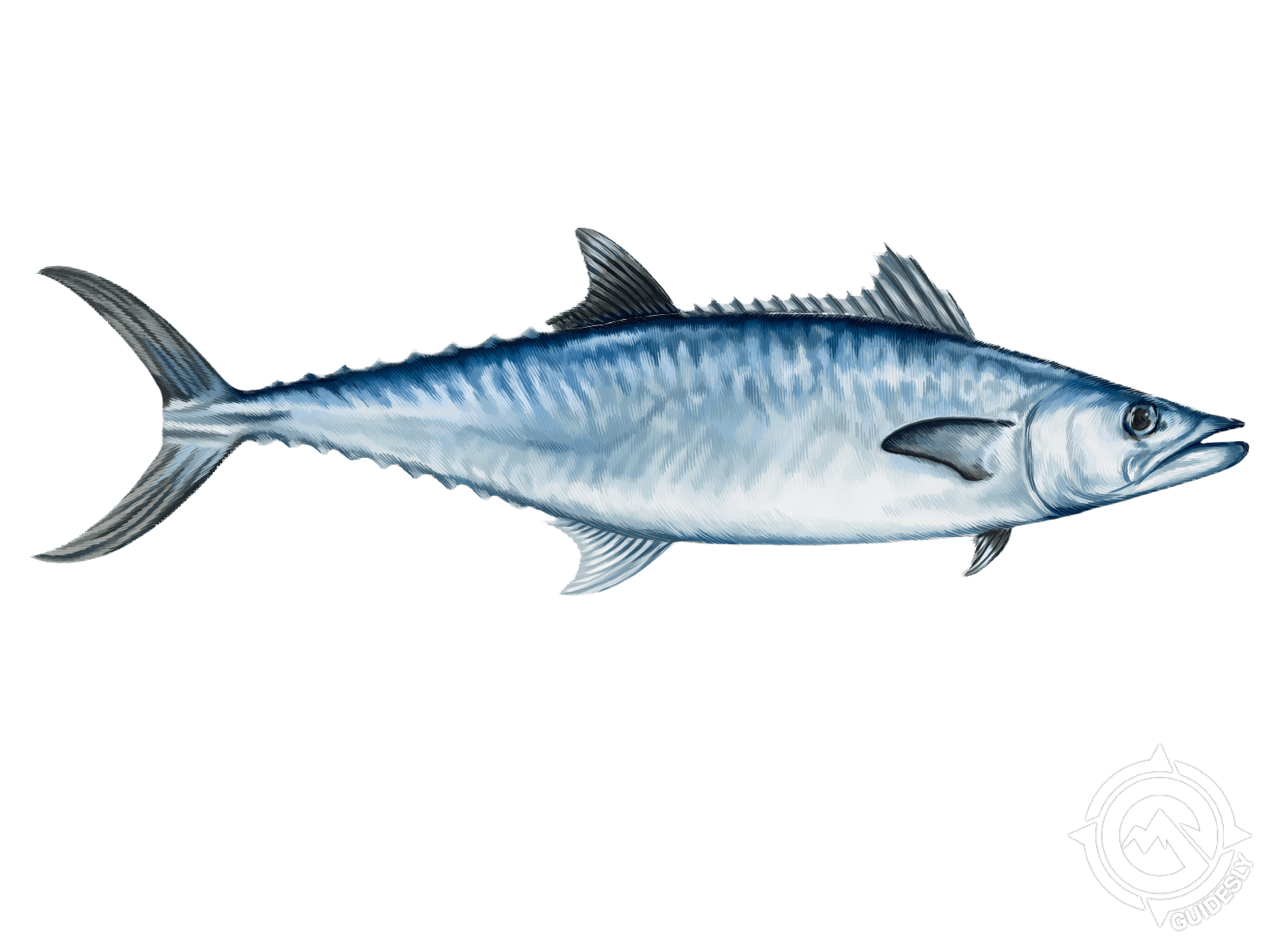
King Mackerel Overview
The King Mackerel (Scomberomorus cavalla) is a fast, aggressive predator belonging to the family Scombridae and the order Perciformes. Also known as Kingfish or Spanish Mackerel, this migratory powerhouse is one of the most sought-after gamefish along the Atlantic Coast and Gulf of Mexico. What makes the King Mackerel truly striking are its small, loosely attached scales, olive-green back contrasting with a pristine white belly, and rosy, iridescent flanks. Smaller specimens may display brown to yellowish spots on their sides, and they possess teeth remarkably similar to the fierce bluefish. King Mackerel earned their reputation for blazing speed—matched only by the wahoo—making them the ultimate thrill for recreational anglers from North Carolina to Texas and throughout the Gulf. Their dynamic presence in waters from Brazil to the Indian Ocean makes them a legendary target wherever they roam.
King Mackerel Habitat and Distribution
King Mackerel thrive in subtropical and warm temperate waters, with their primary range extending along the U.S. Atlantic Coast, the Gulf of Mexico, and scattered populations across the Bay of Bengal and Arabian Sea. They are highly abundant in Brazil, particularly around Rio de Janeiro, and maintain strong populations throughout the Carolinas and the Gulf states. These fish typically inhabit depths ranging from 40 to 150 feet in nearshore environments, though larger specimens venture into deeper offshore waters reaching depths of up to 590 feet. Preferring water temperatures between 68 and 84°F, King Mackerel are commonly found around reefs, wrecks, jetties, and inlets where structure and baitfish concentrate. Seasonal migration patterns move these fish northward in warmer months and southward as temperatures cool, creating predictable fishing windows for anglers who understand their movement.
King Mackerel Size and Weight
King Mackerel are considered medium-sized gamefish with typical catches weighing around 30 pounds. However, trophy specimens regularly exceed 60 pounds, with documented catches surpassing 90 pounds. Most recreational catches range from 19 to 72 inches in length, with weights typically between 10 and 20 pounds for smaller fish. Interestingly, sexual dimorphism is pronounced in this species—female King Mackerel grow significantly larger and heavier than males. For example, a 7-year-old female may weigh approximately 22 pounds, while a male of the same age typically weighs only half as much. This size advantage makes targeting larger specimens especially rewarding for serious anglers seeking trophy-caliber fish.
King Mackerel Diet and Behavior
As an opportunistic carnivore with a voracious appetite, the King Mackerel is a relentless hunter that feeds aggressively throughout the day. Their diet consists of a diverse menu of prey species including blue runner, northern mackerel, striped anchovy, weakfish, cutlassfish, jacks, menhaden, and squid. Their feeding behavior is characterized by explosive strikes and high-speed pursuits, making them thrilling to engage with artificial lures and live bait. King Mackerel are solitary hunters but occasionally congregate in loose schools around productive feeding zones. Their predatory nature and speed mean they occupy a top position in the food chain, and their presence indicates a healthy, active ecosystem. These fish are most active during peak daylight hours and during slack water periods around tidal changes, when baitfish become more vulnerable.
King Mackerel Spawning and Seasonal Activity
King Mackerel reproduce through broadcast spawning, where both sperm and eggs are released directly into the water column and fertilized by chance. This reproductive strategy is typical of open-water fish species and ensures genetic diversity across populations. Fertilized eggs hatch remarkably quickly—in less than a day—allowing rapid population recruitment during optimal environmental conditions. Spawning typically occurs in deeper offshore waters during warmer months, with peak activity occurring in spring and early summer. Migration patterns drive seasonal availability, with northern populations becoming abundant from late spring through early fall, while Gulf of Mexico populations remain accessible year-round. Understanding these spawning cycles helps anglers predict when and where concentrations of King Mackerel will be most actively feeding.
King Mackerel Techniques for Observation and Capture
Trolling with Large Lures and Heavy Tackle: The most popular and effective method for King Mackerel is trolling with large planers, heavy-duty rods, and substantial artificial lures. Deploy spoons, plugs, and topwater offerings at varying depths to locate active fish. Trolling allows anglers to cover large areas and trigger the aggressive predatory response King Mackerel are famous for. This technique works exceptionally well in offshore and nearshore environments where structure and deeper water converge.
Live Bait Rigging with Dual Hooks: When using live bait, employ a strong metal leader with two hooks to account for King Mackerel's habit of striking from the rear. Secure the first hook (single or treble) through the bait's mouth and nose, then position a second treble hook through the back or let it dangle freely. Live mackerel, mullet, herring, and ballyhoo are excellent choices. This technique is particularly effective around inlets, jetties, and nearshore reefs where King Mackerel hunt actively.
Jigging and Structure Fishing: Vertical jigging with heavy spoons and metal jigs around wrecks, reefs, and underwater structure produces consistent results. Position your boat uptide or upcurrent from the structure, drop to the bottom, and work the jig with sharp, aggressive movements. Around North Carolina's popular fishing destinations like the Crystal Coast, this method is particularly productive during spring and fall migration seasons when King Mackerel move through established migration corridors.
King Mackerel Culinary and Utilization Notes
King Mackerel became a commercially marketed fresh fish only in 2005, and their grayish flesh boasts a distinctive high fat content that appeals to many seafood enthusiasts. The meat is firm and flavorful, making it suitable for grilling, smoking, and pan-searing. However, prospective consumers should be aware that King Mackerel, along with shark, swordfish, and tilefish, accumulate elevated mercury levels due to their predatory position and longevity. Health organizations recommend that children and pregnant women avoid consuming King Mackerel regularly or in large quantities due to these mercury concentrations. For most adults, occasional consumption as part of a varied diet poses minimal risk, and the nutritional benefits of omega-3 fatty acids and high-quality protein remain significant when mercury exposure is considered in context.
King Mackerel Frequently Asked Questions
Q: What is the best bait for catching King Mackerel?
A: Live mackerel, mullet, herring, and ballyhoo are excellent natural baits. Many anglers also achieve great success with large artificial lures including spoons, plugs, and topwater offerings. The key is matching the size and movement pattern to local baitfish. Live bait rigged with a dual-hook setup on a strong metal leader maximizes your chances of landing strikes and successfully setting the hook.
Q: Where can I find King Mackerel near North Carolina and Texas?
A: Along the Carolina coast, focus on nearshore reefs, inlets, and the Gulf Stream drop-off from Cape Hatteras southward. Texas anglers find productive populations around offshore platforms, artificial reefs, and the deeper waters of Galveston Bay and Corpus Christi Bay. Both regions see peak abundance during spring and fall migrations, making these seasons ideal for targeting trophy fish.
Q: Is King Mackerel good to eat?
A: Yes, King Mackerel is considered a good food fish with firm, flavorful grayish meat. However, due to elevated mercury content, health authorities recommend limiting consumption, particularly for children and pregnant women. When prepared fresh—grilled, smoked, or pan-seared—King Mackerel delivers excellent flavor and nutrition for most adults who enjoy it in moderation as part of a balanced diet.
Q: When is the best time to catch King Mackerel?
A: Peak fishing occurs during spring and fall migration periods when concentrations are highest and fish are most actively feeding. Summer provides consistent action in northern waters, while winter fishing is productive in Gulf of Mexico and southern Atlantic locations. Time your fishing around slack water periods and peak feeding times—typically early morning and late afternoon—for best results.
Q: How can I distinguish King Mackerel from Spanish Mackerel or Cero?
A: The lateral line is your key identifier. On King Mackerel, the lateral line runs straight across the mid-body and then angles sharply downward toward the tail. On Spanish Mackerel and Cero, the lateral line slopes gradually from the gill cover all the way to the tail. Additionally, King Mackerel typically grow larger and lack the prominent yellow spots characteristic of Spanish Mackerel.
Q: What tackle should I use for King Mackerel?
A: Use heavy-duty saltwater tackle rated for 30- to 80-pound test line. For trolling, employ conventional reels with adequate line capacity, heavy planers or downriggers, and rods with backbone to handle large lures and aggressive fish. For jigging and live bait fishing, use stout conventional or high-speed multiplier reels paired with quality saltwater rods. Always employ a strong metal leader (40 to 100 pounds) to withstand their sharp teeth and powerful runs.
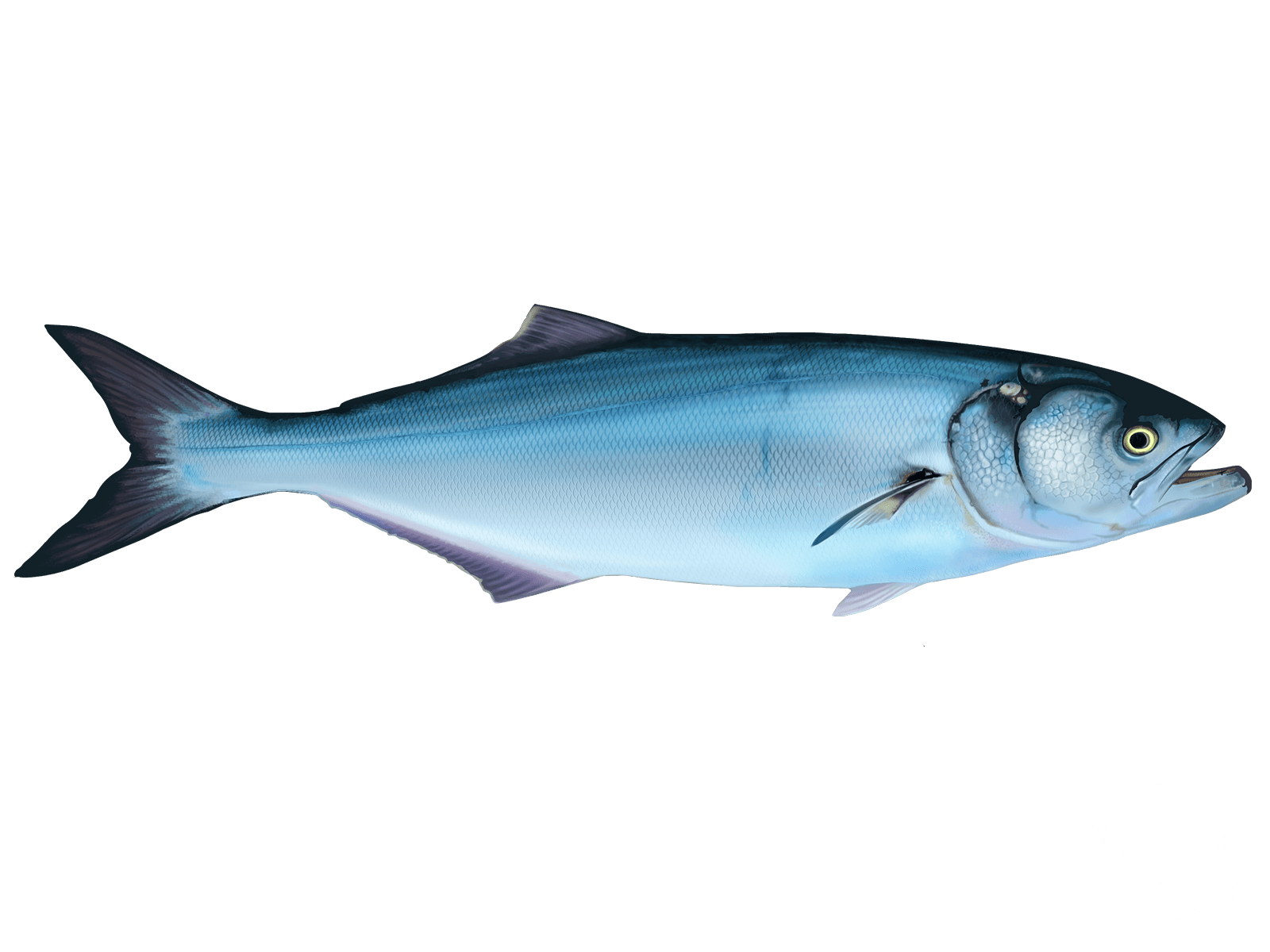
Bluefish Overview
Bluefish (Pomatomus saltatrix), belonging to the family Pomatomidae and order Perciformes, stands as one of the most exciting game fish for anglers across coastal North America. This voracious predator is instantly recognizable by its grayish-blue dorsal coloring that transitions to a brilliant white belly, along with its prominent flat, triangular teeth and broad, corked tail. Known locally as Shad in South Africa and Tailor in Australia and New Zealand, the Bluefish represents the only remaining living species in its family and has captivated fishing communities from Cape Cod to the Carolinas for generations. What makes this species particularly thrilling is its aggressive hunting behavior and reputation for explosive, churning attacks on baitfish schools—a phenomenon anglers affectionately call the "Bluefish Blitz."
Bluefish Habitat and Distribution
Bluefish thrive in subtropical and temperate marine waters worldwide, with strong populations along the continental shelves of North America, Australia, and Southeast Asia. As a warm-water migratory species, they inhabit the Atlantic Ocean from Nova Scotia south to Argentina, with populations also found from Spain to southern Africa. Seasonal visitors to prime fishing grounds like Cape Cod arrive reliably in mid-June and remain through mid-October, spending winters in warmer waters stretching from North Carolina to Florida's tip. These pelagic fish favor diverse habitats including brackish estuaries, rocky headlands, surf beaches, tidal rivers, sandy harbors, and deeper continental shelf waters. Unlike many species, Bluefish are notably absent from the north Pacific Ocean, making Atlantic and Gulf Coast locations your best bet for encounters. Their nomadic nature means they frequently migrate to open waters in organized schools, making them predictable targets for both recreational and commercial anglers.
Bluefish Size and Weight
Bluefish exhibit impressive growth potential, with typical specimens reaching between 15 to 51 inches in length and weighing anywhere from 3 to 15 pounds on average. However, exceptional individuals can exceed these ranges, with documented catches pushing toward 40 pounds—though the majority of the population maxes out around 20 pounds. Juvenile Bluefish, locally known as "baby blues" or "snappers," offer excellent opportunities for inexperienced anglers in late summer, as these smaller fish inhabit sandy harbors, bays, and tidal rivers in accessible shallow waters. Size often correlates with flavor intensity; smaller fish deliver milder, more delicate meat, while larger specimens develop a more pronounced, robust taste that some anglers prefer for grilling or smoking.
Bluefish Diet and Behavior
Few fish match the Bluefish's aggressive feeding intensity and diverse appetite. These relentless hunters actively pursue schools of forage fish at remarkable speeds, engaging in feeding frenzies that continue even after their stomachs are satisfied—a behavioral trait that makes them thrilling targets for anglers. Their preferred prey includes sardine-like fish, Menhaden, Weakfish, Grunt, Anchovy, Squid, and Shrimp, though they'll opportunistically consume nearly any baitfish smaller than themselves. The species' large mouth and formidable sharp teeth make them efficient predators, capable of devastating baitfish schools in shallow depths with their characteristic churning, washing-machine-like attacks. Interestingly, Bluefish display cannibalistic tendencies and may consume their own young during competitive feeding scenarios. In return, adult Bluefish serve as important prey for larger apex predators including Dolphins, Billfish, Sharks, and Tuna, creating a dynamic ecological balance in coastal food webs.
Bluefish Spawning and Seasonal Activity
Bluefish demonstrate highly predictable seasonal migration patterns driven by water temperature preferences. These warm-water specialists arrive at northern feeding grounds like Cape Cod in mid-June as water temperatures rise, establishing active populations throughout summer months when forage fish abundance peaks. The primary active season extends through mid-October, during which Bluefish exhibit peak aggression and feeding intensity—making late summer and early fall prime time for anglers seeking consistent action. As autumn progresses and water cools, populations begin their southward migration, wintering in subtropical waters from North Carolina down to Florida's southern tip. This seasonal predictability has made Bluefish a cornerstone of summer recreational fisheries, with many coastal communities organizing fishing tournaments and charter operations specifically timed to coincide with peak migration windows. Spawning activity and breeding seasons remain less widely documented, but fish can live up to nine years, suggesting multiple reproductive cycles per individual.
Bluefish Techniques for Observation and Capture
Hook and Line Method: Recreational anglers should employ circle hooks exclusively—this is a regulatory requirement in many jurisdictions. Target Bluefish during early morning and late evening hours when they're most actively feeding in nearshore and onshore environments. Use oily baits like eels, mackerel, or herring, or employ cut bait fashioned into small lure-like chunks. Cast along tidal river channels, sandy harbor drop-offs, and bay edges where schooling behavior concentrates prey. Artificial lures featuring up to two treble hooks and flies work effectively when retrieved through active feeding zones. Around popular spots like Cape Cod and the Carolina coast, expect best results during slack tide transitions when current changes trigger feeding frenzies.
Gillnet and Trawl Methods: Commercial operations employ gillnets and trawl gear with proper permitting and adherence to state-specific catch quotas and annual limits. Recreational anglers are typically restricted to a daily bag limit of three fish with no minimum size requirement in many regions, though regulations vary by state and should be verified locally before fishing.
Localized Insight: Around coastal communities from Massachusetts to the Outer Banks of North Carolina, experienced anglers time their outings to coincide with documented Bluefish migration windows and watch for telltale surface disturbances—the characteristic churning water that signals an active feeding school. When you spot that characteristic blitz action, position your boat or cast from shore immediately, as these feeding events typically dissipate quickly.
Bluefish Culinary and Utilization Notes
When properly prepared, Bluefish delivers surprisingly excellent eating with mild, flaky white meat that takes well to grilling, smoking, baking, or pan-searing. Smaller specimens under 10 pounds offer the most delicate flavor profile and tender texture, making them ideal for fine dining applications. Larger fish develop stronger, more assertive flavors that some anglers and chefs prize for robust preparations like blackened recipes or smoked versions. The species boasts impressive omega-3 fatty acid content, offering genuine nutritional benefits—however, health advisories caution that Bluefish accumulates significant mercury levels, and health authorities recommend limiting consumption for children and adult women. Commercial and recreational fisheries employ bag limits and annual quotas specifically designed to prevent overfishing while maintaining healthy stock populations for future generations. Proper filleting and removal of the dark lateral line meat can reduce any undesirable flavors in larger specimens.
Bluefish Frequently Asked Questions
Q: What is the best bait for catching Bluefish?
A: Oily fish baits like eels, mackerel, herring, and sardines consistently outperform alternatives. Cut bait fashioned into small lure-like chunks also proves highly effective. Nearly any baitfish will work given Bluefish's aggressive predatory nature, though oilier options leave stronger scent trails that attract fish from greater distances.
Q: Where can I find Bluefish near Cape Cod or other popular fishing destinations?
A: Bluefish concentrate in tidal rivers, sandy harbors, bays, and nearshore coastal waters during their June-through-October season. Look for schooling activity in channels, drop-offs, and areas where currents concentrate baitfish. Around Cape Cod, prime locations include tidal rivers, bay systems, and surf beaches where seasonal migrations predictably pass through.
Q: Is Bluefish good to eat, and are there any health concerns?
A: Yes, when properly prepared, Bluefish is delicious with mild, flaky meat and impressive omega-3 content. However, health authorities advise limiting consumption for children and adult women due to mercury accumulation. Smaller fish generally offer milder flavor and lower mercury concentrations than larger specimens.
Q: When is the best time to catch Bluefish?
A: Peak season runs from mid-June through mid-October, with particularly active feeding in late summer. Early morning and late evening hours, combined with slack tide transitions, provide optimal conditions. Late summer offers bonus opportunities to target juvenile "snappers" in shallow sandy harbors and bays.
Q: Do I need special equipment or permits to catch Bluefish?
A: Recreational anglers must use circle hooks exclusively in many jurisdictions and are typically limited to three fish per day with no minimum size. Commercial fishing requires proper permits and adherence to state-specific annual quotas. Check local regulations before fishing, as rules vary by region.
Q: What makes Bluefish different from other game fish?
A: Bluefish are famous for their aggressive, almost violent feeding behavior—the explosive "Bluefish Blitz" where schools churn water like washing machines while attacking baitfish. Combined with their impressive growth potential, availability during summer months, and excellent eating quality, they've earned legendary status among coastal anglers seeking both action and culinary reward.